
The most crucial aspect of this set of data is not the numbers themselves, but the measurement conditions.
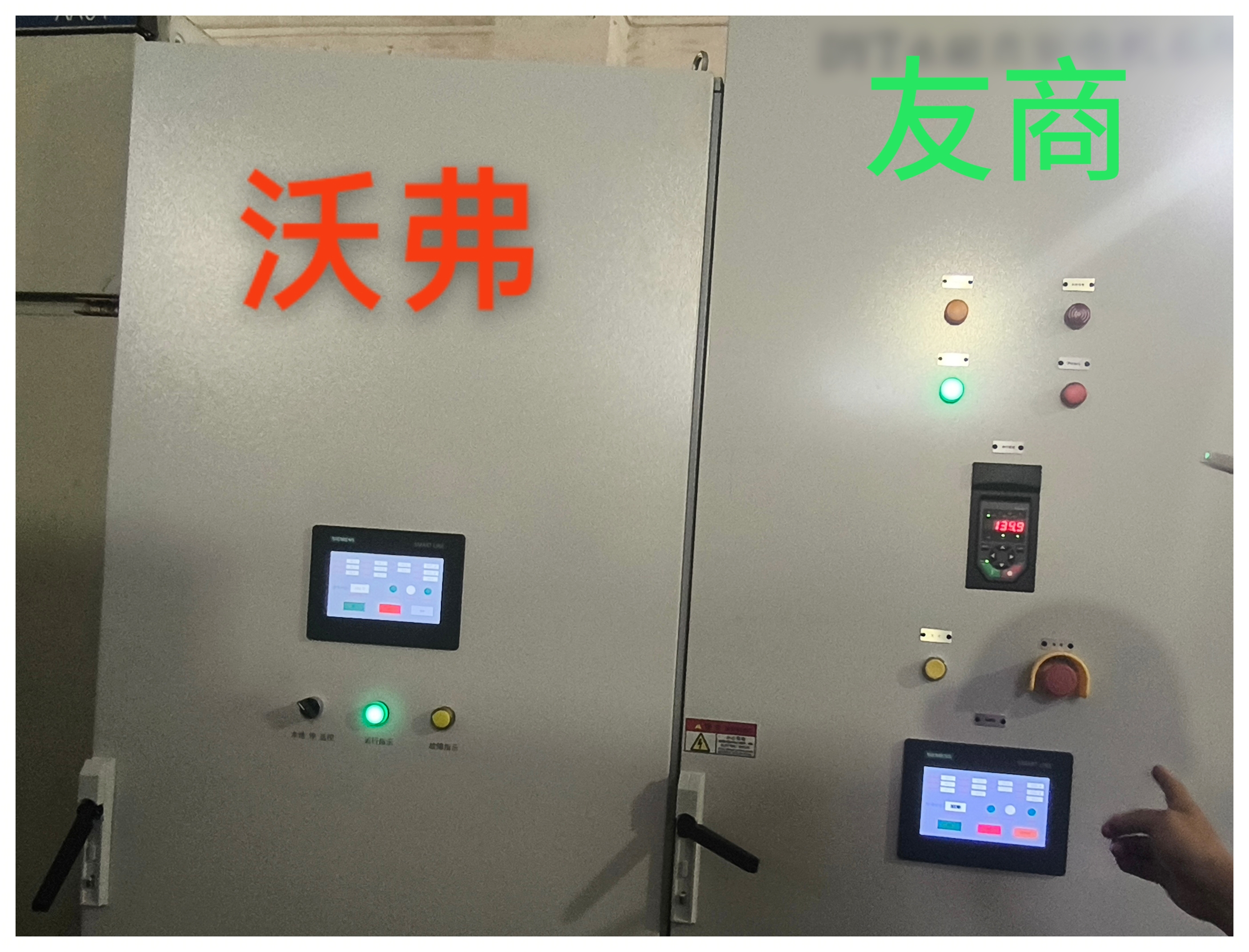
The 90kW cooling tower direct-drive permanent magnet motor renovation project of a certain color company, using VOOFU permanent magnet technology and the competitor's solution, employed the same brand of inverter and power distribution cabinet specified by the owner's unit. The rotational speed was both 154 rpm, and the working conditions were exactly the same. The current data was directly read from the panel of the inverter in the power distribution cabinet.
| Comparison item | VOOFU | Competitor | Difference |
|---|---|---|---|
| Operating current (displayed by the distribution cabinet's frequency converter) | 106A | 134A | ↓28A(A decrease of 20.9%) |
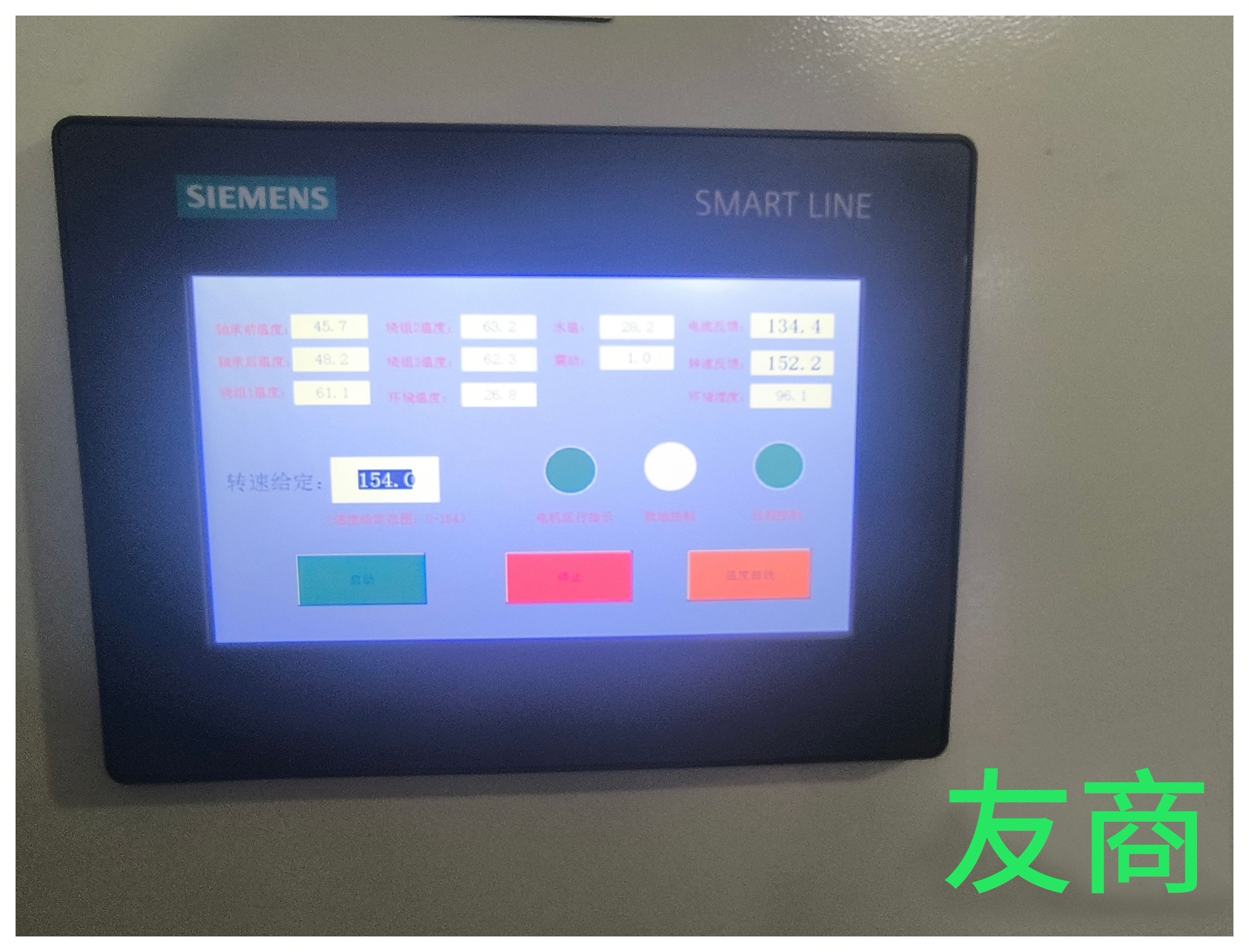
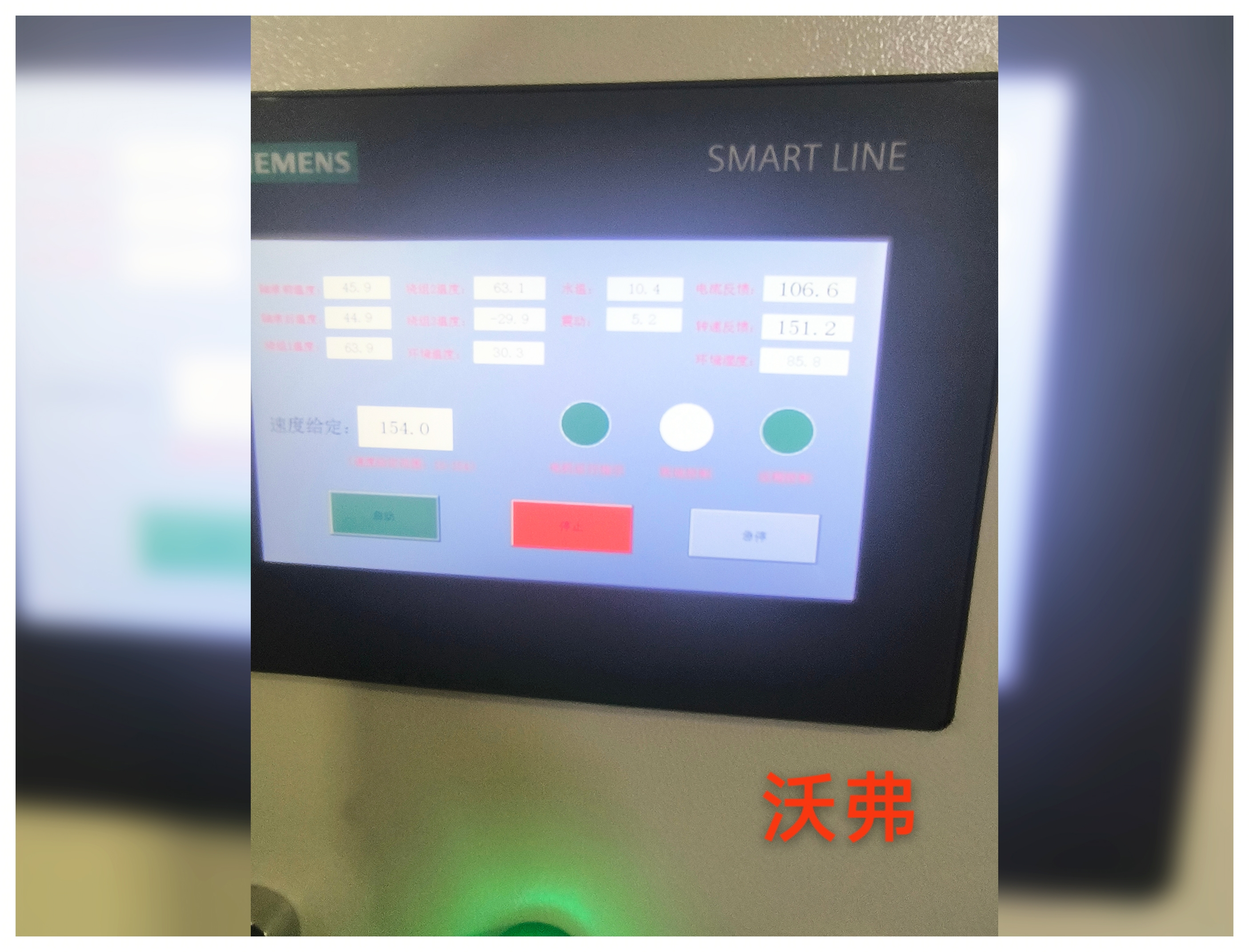
The same cabinet, the same frequency converter, the same sampling circuit, and the same display panel. There is only one variable: the motor itself.
I. Why is "the same frequency converter" so important
Anyone who has conducted a technical renovation comparison knows that the most common complaint is:
"Your inverter is good, so it naturally saves power."
"The sampling points are different, so the data is not comparable."
"Your inverter has high precision, but the readings are too low."
This time, all these doubts are completely unfounded. The owner's unit has specified the use of the same brand of inverter for the power distribution cabinet, which means:
| Conditions | Explanation |
|---|---|
| Frequency converter brand | The same brand |
| Distribution cabinet | The same one |
| Sampling loop | The same set |
| Display logic | The same algorithm |
| Power supply source | The same busbar |
The only difference is the motor. The disparity between 106A and 134A is not due to equipment differences, not caused by measurement errors, nor is it due to different control strategies - it is the efficiency gap of the motor itself, clearly displayed on the screen of the distribution cabinet.
II. What does 28A mean? Do the math
Based on a calculation of 380V and a power factor of 0.85:
Competitor's input power: 1.732 × 0.38 × 134 × 0.85 ≈ 74.9 kW
VOOFU input power: 1.732 × 0.38 × 106 × 0.85 ≈ 59.3 kW
Power difference: ≈ 15.6 kW (a reduction of approximately 20.8%)
If the annual operation time is 6000 hours and the electricity price is 0.5 yuan per kilowatt-hour:
Annual electricity savings ≈ 15.6 × 6000 × 0.5 ≈ 46,800 yuan
A 90kW cooling tower motor saves nearly 50,000 yuan per year. And this figure is not an estimate; it is the real-time parameter displayed on the distribution cabinet - as long as the equipment is running, the difference is there.
III. In the same case of permanent magnet direct drive, where does the difference come from?
Many people think that since both are called "permanent magnet direct drive", their performances should be quite similar.
A certain color company answered this question with actual data for this project: The difference is significant.
| Comparison dimension | VOOFU permanent magnet direct drive | Competitor's permanent magnet direct drive |
|---|---|---|
| Motor type | Permanent magnet direct drive | Permanent magnet direct drive |
| Operating current (154 rpm) | 106A | 134A |
| Current difference | — | Exceeds by 26.4% |
| Transmission structure | Direct drive, level 1 | Direct drive |
| Reducer | Cancelled | Cancelled |
The structures look the same - both are direct drive and have no gearbox. But current doesn't lie - with the same 154 rpm and the same load, the competitor's solution consumes 28A more electricity.
The difference lies not in the transmission structure, but in the design level of the motor itself: magnetic circuit design, winding scheme, iron loss control, heat dissipation efficiency... These invisible aspects will ultimately be reflected in the current readings of the distribution cabinet.
IV. Key Findings
| Indicators | VOOFU permanent magnet direct drive | Competitor's permanent magnet direct drive |
|---|---|---|
| The owner has specified the frequency converter. | With | With |
| Speed | 154rpm | 154rpm |
| Operating current (displayed by the distribution cabinet) | 106A | 134A |
| Current reduction | ↓20.9% | — |
| Estimated annual electricity cost savings | Approximately ¥47,000 | — |
Final Note
106A to 134A, 28 amperes.
This set of data is not a third-party test report, nor is it a laboratory bench test, nor is it a random inspection using a portable clamp meter - it is the two numbers displayed simultaneously on the screen when two sets of the same model of inverter power distribution cabinets are running side by side on the property owner's designated equipment.
When the measuring tools are the same, the power supply conditions are the same, the load conditions are the same, the rotational speed is the same, the remaining differences are the differences of the products themselves.
No need for explanations, no need for defenses. The numbers on the distribution cabinet speak for themselves.